Researcher Information

KAWANO Jun

Associate Professor

Understanding atomic-scale mechanisms of mineral growth

Department of Earth and Planetary Sciences, Earth and Planetary System Science
basic_photo_1
Theme

Experimental and theoretical investigation for metastable formation mechanism of carbonate minerals
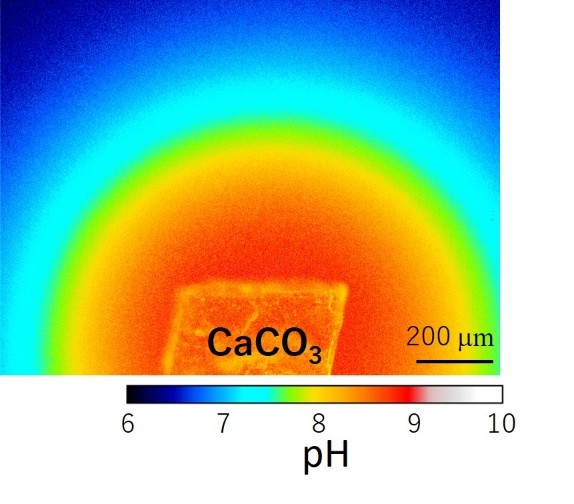
Visualization of pH distribution around growing/dissolving minerals in aqueous solutions

FieldMineralogy, Crystal Growth
KeywordMinerals, Crystal Growth, Biomineralization, Mineral/water interface, Metastable phase, Amorphous, Carbonate minerals, Molecular simulation

Introduction of Research

My research interests are in understanding crystal growth and phase transformation mechanisms of various minerals based on both experimental and computational techniques. Especially, I would like to know the nucleation and surface process of carbonate minerals, which are common biominerals forming biological hard tissues like shells and coral skeletons.

Representative Achievements

The Effect of Mg2+ Incorporation on the Structure of Calcium Carbonate Clusters: Investigation by the Anharmonic Downward Distortion Following Method, J. Kawano, S. Maeda, and T. Nagai, Phys. Chem. Chem. Phys., 2016, 18, 2690-2698.
Incorporation of Mg2+ in surface Ca2+ sites of aragonite: an ab initio study, J. Kawano, H. Sakuma, and T. Nagai, Prog. Earth Plan. Sci., 2015, 2:7.
Precipitation diagram of calcium carbonate polymorphs: its construction and significance. J. Kawano, A. Miyake, N. Shimobayashi, M. and Kitamura, J. Phys.: Condens. Matter, 2009, 21, 425012.
Molecular dynamics simulation of the rotational order–disorder phase transition in calcite. J. Kawano, A. Miyake, N. Shimobayashi, and M. Kitamura. J. Phys.: Condens. Matter, 2009, 21, 095406.
Formation process of calcium carbonate from highly supersaturated solution, J. Kawano, N. Shimobayashi, M. Kitamura, K. Shinoda, and N. Aikawa, J. Cryst. Growth, 2002, 237-239(1), 419-423.

Related industries

Materials Science, Crystal Engineering, Environmental Science, Agrochemistry
Academic degreePh.D.
Academic background1998 B.Sci. Faculty of Science, Kyoto University
2000 M.Sci. Graduate School of Science, Kyoto University
2003 Ph.D. Graduate School of Science, Kyoto University
2003-2005 Postdoctoral Fellow, Kyoto University
2005-2007 Lecturer, Yamanashi Institute of Gemology and Jewelry Art
2007-2010 Researcher, Research Laboratory, Gemological Association of All Japan
2010-2011 Research Associate, Research Institute of Applied Mechanics, Kyusyu University
2011 Research Assistant Professor, Research Institute of Applied Mechanics, Kyusyu University
2011-2016 Assistant Professor, Creative Research Institution, Hokkaido University
2016-present
Affiliated academic societyJapan Association of Mineralogical Sciences, The Japanese Association of Crystal Growth, The Molecular Simulation Society of Japan, Mineralogical Society of America, The Japan Society of Applied Physics
Room addressFaculty of Science Building 6 2006-08-04

Department of Earth and Planetary Sciences, Earth and Planetary System Science

KAWANO Jun

Associate Professor

basic_photo_1
What is the research theme that you are currently focusing on?

I am interested in the mechanisms of mineral formation, and I have recently focused on visualizing changes in pH and ion concentration distributions during the dissolution and growth of minerals in aqueous solutions (Figure). Direct observation of local changes in the chemical environment around reacting minerals has revealed ion behaviors that differ from what would be predicted by conventional chemical equations. In this technique, reagents are used that emit different fluorescence intensities depending on ion concentration differences when irradiated with light of certain wavelengths. Originally developed for biological research, we have adapted and refined this method for application to inorganic reactions. We expect it will not only contribute to elucidating fundamental mineral reaction mechanisms but also enable a quantitative understanding of how these reactions influence environmental changes and aid in determining the reactivity of industrial materials.

Figure: pH change during the dissolution of calcium carbonate (calcite) crystals
basic_photo_1
Please briefly introduce us to the big project you have been tackling.

I am joining the project named “Carbonate Biology (Project leader: Prof. Michio Suzuki of U Tokyo)”, which aims to clarify how the process by which marine organisms such as bivalves create calcium carbonate shells (biomineralization) contributes to carbon dioxide fixation in the global environment. Generally, the reaction forming calcium carbonate (calcification) has been recognized as a process that releases carbon dioxide and lowers pH, and thus does not contribute to carbon fixation. However, we believe that the movement of hydrogen ions may be controlled by organic matter during the biomineralization process, thereby fixing carbon dioxide. This is supported by the observations of pH changes during actual calcification. By elucidating this mechanism, we aim to contribute to a decarbonized society.

basic_photo_1
Please tell us what you think is good about your lab (staff, students, laboratory equipment, the number of papers published, etc.)

“Mineral” is generally referred to as a naturally occurring crystal, and mineralogy is connected to various fields related to crystals. After I got my degree in experimental and simulation research on mineral formation and stability, I pursued education and research on gemstones at a technical school and a private company. I later moved to the engineering department of a university, where I conducted simulation research on crystal growth for solar cells. Currently, I am also focusing on crystals formed by organisms, such as bivalves, foraminifera, teeth, and bones, and am advancing collaborative research with researchers in each field. Furthermore, the processes at the early stages of crystal formation have consistently been a subject of my interest, and the simulation study on the molecular aggregation processes, which was conducted with the quantum chemistry experts, is one of the subjects we want to further explore. My students’ research topics are diverse, and we enjoy our research, challenging new fields.